





Water Fountain Filter Guide: How to Choose, Identify, and Replace the Right Filter
Posted by Anthony DiCicco on Mar 24th 2026
Water Fountain Filter Guide: How to Choose, Identify, and Replace the Right Filter
Choosing the right water fountain filter is one of the most important parts of maintaining clean, safe drinking water. Whether you manage a school, office, or public facility, using the correct filter directly impacts water quality, system performance, and long term reliability.
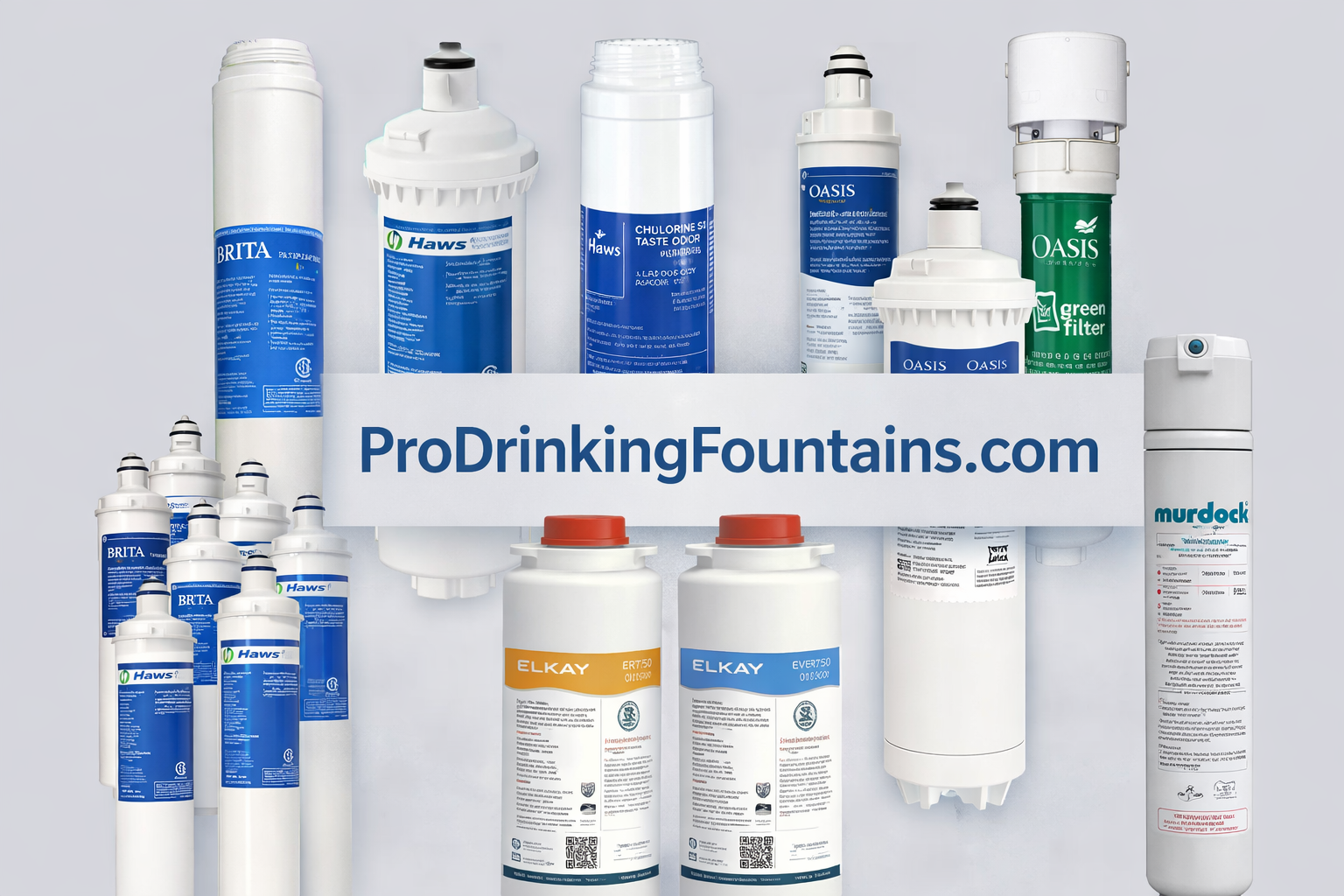
Most buyers run into problems because they are unsure which filter their unit actually uses. This guide breaks down how to identify the correct filter, how often to replace it, how to install it, and how systems differ across major brands.
Call 888-503-7937 and our team can quickly match your unit to the correct replacement based on model number, existing filter, or system type.
What Do Water Fountain Filters Remove?
Most commercial drinking fountain filters are designed to reduce contaminants that affect taste, odor, and safety.
- Chlorine taste and odor
- Lead and heavy metals
- Sediment and particulates
- Microplastics and emerging contaminants
Most filters are certified to NSF 42, 53, and sometimes 401 depending on the system. NSF 42 focuses on taste and odor, NSF 53 targets health related contaminants like lead, and NSF 401 addresses emerging contaminants such as pharmaceuticals and microplastics. Choosing a filter with the right certifications ensures your system is actually removing what matters for your specific environment.
It is also important to understand that not all filters perform equally. OEM filters are engineered specifically for each system to maintain flow rate, pressure, and filtration performance. Using off-brand filters can lead to reduced performance or compatibility issues.
How Often Should You Replace a Water Fountain Filter?
Filter life depends on usage and system type, but most commercial filters fall into a few standard ranges.
- 1,500 to 3,000 gallons for standard filters
- Up to 6,000 to 10,000 gallons for high capacity systems
- Typically 6 to 12 months of use
High traffic environments such as schools, gyms, and public buildings will reach gallon capacity much faster than office settings. In these cases, filters may need to be replaced every few months instead of once per year.
Water quality also plays a major role. Areas with higher sediment, older plumbing, or known contaminant concerns will reduce filter lifespan. Always follow both the time and gallon rating to maintain performance.
For detailed brand-specific replacement steps and reset instructions, see our bottle filling station filter replacement guide.
Signs Your Water Fountain Filter Needs to Be Replaced
In many cases, your water fountain or bottle filling station will show clear signs when the filter is nearing the end of its service life. Waiting too long can reduce water quality, restrict flow, and put added strain on the system.
- Water tastes or smells different than usual
- Flow rate has slowed down
- The filter status light has changed color
- The unit has reached its recommended gallon capacity
- It has been 6 to 12 months since the last replacement
Some systems monitor filter life electronically, while others depend on maintenance schedules and visual inspections. If your building has high daily usage, replacement may be needed much sooner than the calendar alone suggests.
A good rule is to replace the filter before performance noticeably drops. This helps maintain cleaner tasting water and prevents users from avoiding the station because of slow flow or poor taste.
How to Replace a Water Fountain Filter
Most modern drinking fountain and bottle filling station filters are designed for relatively simple replacement, but the exact process depends on the brand and filter system. Always follow the manufacturer instructions for your specific unit.
- Identify the correct replacement filter
- Turn off the water supply if required by the manufacturer
- Remove the old filter cartridge or inline filter
- Install the new OEM replacement filter
- Flush the system as recommended
- Reset the filter monitor or status light if applicable
Twist lock cartridges are common on many hydration stations, while some older or specialty systems use inline filters, multi-stage cartridges, reverse osmosis membranes, or UV components. That is why matching the exact filter system matters before installation begins.
After replacement, flush the new filter thoroughly to remove air and any harmless carbon fines. This step is especially important if users report cloudy water or a slight taste change immediately after installation.
How to Identify the Correct Water Fountain Filter
This is where most confusion happens. Filters are not universal, and each manufacturer uses different systems.
- Start with the brand of your unit
- Find the model number inside the panel or on the unit
- Match it to the correct filter system
- If unsure, compare the existing filter or contact support
If the label is missing, the existing filter cartridge is often the best reference point. Most cartridges have a part number printed directly on the body.
Advanced systems such as reverse osmosis or UV filtration require matching multiple components, including membranes, pre-filters, and sterilization elements. These are not interchangeable with standard carbon filters.
Quick Filter Match Guide by Model
If you already know your unit model, this quick reference will help you identify the most common replacement filters used across major brands. Always verify compatibility before ordering.
| Brand | Common Unit Types | Typical Filter Models |
|---|---|---|
| Elkay | ezH2O bottle fillers, fountains | 51300C, 51299C, 51600C |
| Halsey Taylor | Hydration stations, fountains | 55898C and compatible systems |
| Oasis | VersaFilter, retrofit systems | VersaFilter cartridges, Green Filter systems |
| Haws | Hydration stations | 6423, 6424, 6429 |
| Murdock | Bottle fillers, filtered fountains | WF3000, RWF3000 |
| Global Water | Point of use coolers | RO membranes, carbon pre-filters, UV systems |
| Sloan | Bottle fillers, fountains | FC3000R and model-specific filters |
Water Fountain Filters by Brand
Elkay
Popular models include 51300C, 51299C, and 51600C. Used in ezH2O systems and widely installed in schools and commercial buildings. These filters are known for consistent performance and easy twist replacement design. Find Elkay water filters here.
Oasis
Oasis water filters include VersaFilter and Green Filter systems with multiple configurations such as EZ Turn and inline designs. These systems are commonly used in retrofit applications and offer flexible installation options.
Haws and Brita Hydration
Model specific systems such as 6423, 6424, and 6429 tied to hydration stations. These are often used in commercial and institutional environments requiring consistent filtration performance. See all Haws filters and Brita filters here.
Halsey Taylor
Uses similar filtration systems to Elkay with models like 55898C. These systems are widely used in institutional settings and are known for reliability and ease of maintenance. You can purchase Halsey Taylor filters here.
Murdock
WF3000 and RWF3000 systems focus on PFAS reduction and high performance filtration. These are commonly used where water quality requirements are stricter. Find Murdock filters here.
Global Water
Uses multi stage filtration including reverse osmosis membranes, UV sterilization, and ozone systems. These systems provide advanced purification beyond standard carbon filtration and are commonly used in offices and point of use applications. We carry Global Water filters ready to ship.
Sloan
Filter types vary by model. Sloan systems may use inline carbon filtration or integrated filter kits depending on the unit configuration. Always verify compatibility before ordering. Contact us to purchase the SLOAN FC3000R replacement filter or any other replacement filters for Sloan.
OEM vs Compatible Water Fountain Filters
When replacing a water fountain filter, one of the biggest decisions is whether to use an OEM filter or a third party compatible option. For commercial buildings, schools, and public facilities, OEM filters are usually the safer long term choice.
OEM filters are designed specifically for the unit they serve. That means the fit, flow characteristics, seal design, and filtration performance are intended to work with the original manufacturer system.
Compatible filters may appear similar, but fit and performance can vary. In some cases, a lower cost replacement may not deliver the same service life, flow rate, or contaminant reduction expected from the original filter system.
- OEM filters are typically the best option for fit and reliability
- Using the correct filter helps maintain intended system performance
- A poor fit can lead to leaks, bypass, or reduced water flow
- For public and institutional settings, consistency matters more than small upfront savings
If you are managing multiple facilities, standardizing around OEM filters can also simplify maintenance schedules, ordering, and troubleshooting. It reduces guesswork and helps avoid the common problem of installing a filter that looks right but does not perform correctly in the field.
Bottle Filling Station Filters vs Drinking Fountain Filters
Bottle filling stations and traditional drinking fountains often use similar filtration technology, but usage patterns are very different.
- Bottle fillers typically have higher usage and require more frequent filter changes
- Fountains without bottle fillers may have longer filter life
- Combination units require consistent maintenance due to higher demand
Understanding how your unit is used is just as important as selecting the correct filter model.
How to Choose the Right Filter for Your Facility
The best filter is not just about brand compatibility. It should also match the environment where the unit is installed. A school hallway, office break room, fitness center, and public building may all have very different usage patterns and water quality concerns.
- Schools and universities often need higher capacity filters due to heavy daily traffic
- Office settings may prioritize taste and odor reduction with more moderate usage
- Public facilities may need stricter maintenance schedules because of unpredictable demand
- Locations with older plumbing may need closer attention to contaminant reduction and replacement frequency
It is also important to think about maintenance access. Some facilities benefit from quick change cartridge systems, while others may require more advanced multi-stage filtration for point of use coolers or specialty hydration equipment.
Choosing the right filter means balancing compatibility, capacity, water quality goals, and ease of service. For most commercial buyers, the best approach is to start with the exact unit model and then confirm the recommended OEM replacement filter for that application.
How to Reset a Water Fountain Filter Status Light
After installing a new filter, many bottle filling stations and drinking fountains require the filter status monitor to be reset. If this step is skipped, the light may continue to show that the filter needs replacement even though a new cartridge has already been installed.
The exact reset process depends on the brand and model. Some units use a reset button behind the panel, while others use a hold sequence on the display or control board. Because the process is model specific, it is always best to follow the instructions for your exact unit.
- Locate the filter reset button or control area
- Confirm the new filter is fully installed
- Flush the new filter if required
- Perform the manufacturer recommended reset process
- Verify the status light returns to normal operation
If the light does not reset, double check the filter installation, verify compatibility, and review the unit instructions. In some cases, a filter monitor issue can also be caused by an incomplete installation or an incorrect replacement cartridge.
For maintenance teams, it is helpful to log the replacement date and filter model at the time of reset. That makes future service much easier, especially in schools, gyms, healthcare facilities, and municipal buildings with multiple hydration stations.
Common Problems and Solutions
Bad taste after replacement
Filter may need flushing or may be incorrect. Always run water through the system after installation to remove carbon fines.
Low water flow
Filter may be clogged or at capacity. Replacing the filter typically resolves the issue.
Filter light stays on
System may require a manual reset. Many units have a reset button or sequence after replacement.
Wrong filter ordered
Always verify brand and model before purchasing. Filters are not interchangeable across systems.
Top Takeaways
- Filters are brand and model specific
- Most last 6 to 12 months depending on usage
- High traffic environments require more frequent replacement
- Using the correct filter ensures proper performance and water quality
- OEM filters are usually the best choice for fit, reliability, and consistent results
FAQs
How do I know which water fountain filter I need?
Check the model number of your unit and match it to the correct filter. If the label is missing, the existing filter cartridge often has the part number printed on it.
How often should filters be replaced?
Most filters last 6 to 12 months or until they reach their gallon capacity. High traffic buildings may need more frequent replacement.
Are water fountain filters universal?
No, filters are specific to each brand and system. Always verify compatibility before ordering.
What happens if I do not replace a water fountain filter on time?
You may notice reduced flow, poorer taste, and lower filtration performance. In busy facilities, delayed replacement can affect user satisfaction and overall system reliability.
Should I use OEM or compatible replacement filters?
OEM filters are usually the best option because they are designed for the original unit and help maintain proper fit, flow, and filtration performance.
Why is my filter light still on after I replaced the cartridge?
Many units require a manual reset after installation. If the light stays on, confirm the filter is installed correctly and follow the reset instructions for your specific model.
Do bottle filling stations use the same filters as drinking fountains?
Some do, but bottle filling stations usually see heavier usage and may require more frequent filter changes. Always match the filter to the exact unit model and application.
About the Author
Anthony DiCicco is the CEO of ProDryers and ProDrinkingFountains.com, with over 20 years of experience in commercial restroom and water filtration systems.
He works directly with facilities, contractors, and organizations nationwide to help specify and maintain drinking fountains, bottle filling stations, and filtration systems.