





Commercial Outdoor Drinking Fountain Guide: Parks, Schools, ADA, Freeze Protection & More
Posted by Anthony DiCicco on Aug 10th 2026
Choosing an outdoor drinking fountain is very different from choosing one for an indoor hallway, school corridor, or office building. Outdoor installations must withstand weather, vandalism, heavy public use, changing seasons, and years of exposure to sun, rain, snow, irrigation, and temperature swings while continuing to provide dependable access to drinking water.
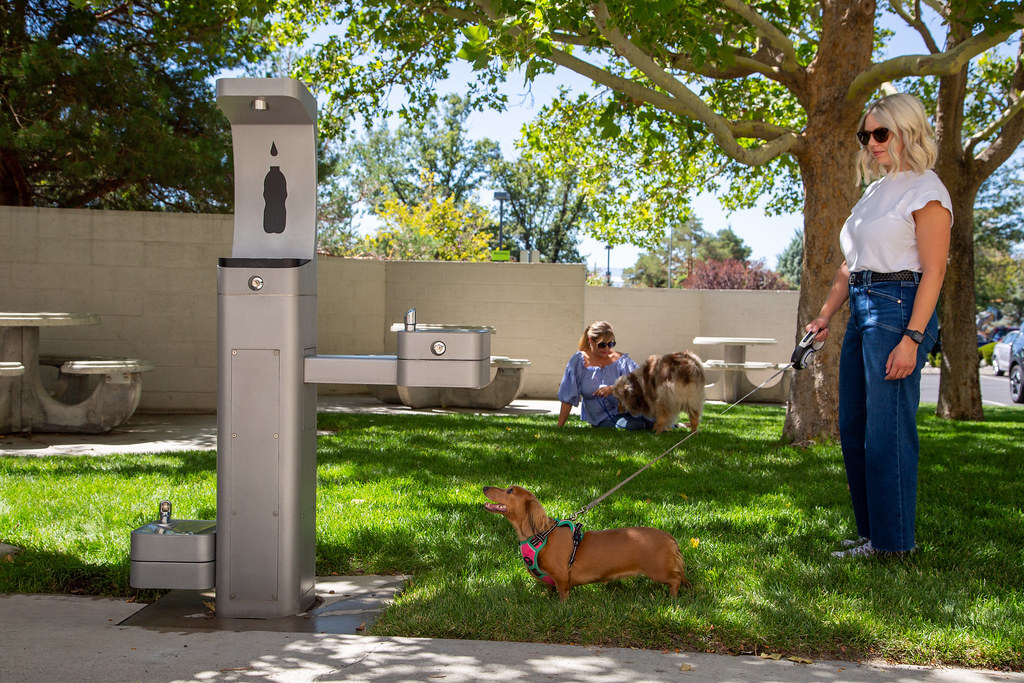
Whether you are planning a city park renovation, designing a new school campus, upgrading a sports complex, adding hydration along a walking trail, or building a dog park, selecting the right outdoor drinking fountain starts with understanding how the location will actually be used. The best model for a neighborhood playground may not be the best choice for a university campus, tennis complex, or municipal park with heavy daily traffic.
This guide explains the most important decisions involved in selecting a commercial outdoor drinking fountain, including construction materials, vandal resistance, freeze protection, bottle filling stations, ADA accessibility, pet bowls, maintenance, and choosing the right configuration for different facilities.
Why Outdoor Drinking Fountains Require Different Planning
Many first-time buyers assume an outdoor drinking fountain is simply an indoor fountain made with weather-resistant materials. Outdoor applications are more demanding than that.
A commercial outdoor fountain may experience direct sunlight, freezing temperatures, heavy rain, irrigation overspray, mud, landscaping equipment, bicycles, athletic traffic, accidental impact, vandalism, and thousands of users over the course of a season. Each of these conditions can affect the longevity and service requirements of the installation.
This is why we encourage customers to evaluate the project before comparing individual models. Once you understand the location, users, climate, and maintenance expectations, selecting the correct product category becomes much easier.
Where Are Outdoor Drinking Fountains Commonly Installed?
Outdoor drinking fountains are used in far more places than traditional neighborhood parks. As communities invest in recreation, wellness, walkability, and reusable bottle infrastructure, outdoor hydration stations are becoming an important part of many commercial and municipal projects.
Common installation locations include:
- Community parks
- Dog parks
- Elementary and secondary schools
- College and university campuses
- Sports complexes
- Tennis and pickleball courts
- Walking trails and greenways
- Bike paths
- Campgrounds and recreation areas
- Playgrounds
- Public plazas
- Downtown streetscapes
- Zoos and botanical gardens
- Municipal facilities
- Rest areas
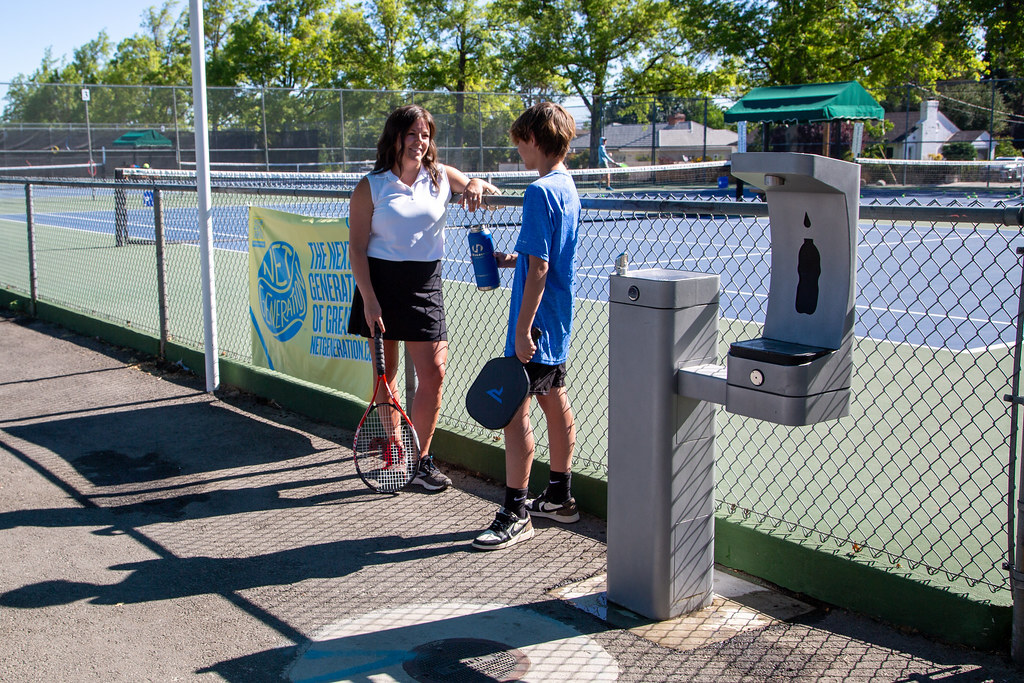
Each location creates different priorities. Tennis courts may need quick bottle refills during practices and tournaments. A dog park may benefit from a pet bowl and good drainage. A walking trail may place a higher priority on reliability and weather protection because maintenance crews visit less frequently.
Which Type of Outdoor Drinking Fountain Is Right for Your Project?
Outdoor drinking fountains are available in several configurations. The right style depends on expected traffic, available utilities, accessibility, maintenance expectations, site layout, and whether users primarily drink directly from the fountain or refill reusable bottles.
| Outdoor Fountain Style | Good Starting Point For | Why Buyers Choose It |
|---|---|---|
| Pedestal Drinking Fountain | Parks, trails, campuses, plazas | Freestanding installation and durable construction options |
| Outdoor Bottle Filling Station | Schools, sports facilities, campuses | Convenient reusable bottle refilling |
| Fountain and Bottle Filler Combination | High-traffic public spaces | Provides direct drinking and bottle refilling in one station |
| Pet Fountain Combination | Dog parks and pet-friendly recreation areas | Provides hydration access for people and pets |
| Wall-Mounted Outdoor Fountain | Schools, buildings, recreation facilities | Works where a suitable exterior wall and utilities are available |
You can compare commercial outdoor drinking fountains after determining which configuration best matches the project.
Choosing the Right Outdoor Drinking Fountain Material
Construction material is one of the most important decisions in an outdoor fountain project. Material can affect corrosion resistance, impact resistance, maintenance, appearance, and long-term ownership costs.
304 Stainless Steel
304 stainless steel is commonly used for commercial outdoor drinking fountains because it provides strong corrosion resistance and a professional appearance in many environments. It is often considered for parks, schools, campuses, sports facilities, and municipal projects where long-term durability matters.
Stainless steel should not automatically be treated as indestructible. Local environmental conditions, maintenance practices, chemicals, coastal exposure, and product construction can all affect long-term performance.
Powder-Coated Steel
Powder-coated outdoor fountains can provide a durable finish while giving architects and landscape designers more color options. These products may blend well with parks, streetscapes, school colors, recreation projects, or surrounding site furniture.
The underlying material, coating system, installation environment, and maintenance practices should all be reviewed when comparing powder-coated models.
Heavy-Duty Construction Matters Beyond the Finish
Do not judge durability by the exterior finish alone. Buyers should also review the manufacturer's specifications for construction, mounting method, internal component protection, and vandal-resistant features where available.
Why Vandal Resistance Matters
Outdoor drinking fountains installed in public areas can experience accidental damage, tampering, misuse, and vandalism that indoor units rarely encounter. This is especially important for parks, downtown areas, unsupervised recreation spaces, trails, and municipal properties.
Depending on the manufacturer and model, vandal-resistant features may include:
- Heavy-duty construction
- Recessed or protected push buttons
- Pinned or tamper-resistant bubblers
- Protected internal plumbing
- Tamper-resistant fasteners
- Reinforced pedestal designs
No outdoor fountain should be assumed to be vandal-proof. The goal is to select construction and components appropriate for the expected environment and level of supervision.
Do You Need a Freeze-Resistant Outdoor Drinking Fountain?
Climate is one of the most important factors to evaluate before purchasing an outdoor drinking fountain.
Cold-weather installations can require different equipment, valves, plumbing arrangements, seasonal shutoff procedures, or winterization strategies than fountains installed in warm climates.
Do not assume that every outdoor fountain can remain operational through freezing temperatures. Likewise, do not assume the words "freeze resistant" mean the product can withstand every possible winter condition without additional planning.
Review the manufacturer's installation instructions and temperature-related recommendations for the exact model. Facilities in northern climates should also determine whether the fountain will remain operational during winter or be shut down seasonally.
Choosing the Right Outdoor Drinking Fountain for Your Facility
The installation location often has a greater influence on product selection than the brand name on the fountain. A model that makes sense at a neighborhood park may not be the best fit for a university campus, and a hydration station designed for athletes may include features that provide little value at a quiet trailhead.
Before comparing models, think about daily use, peak demand, climate, vandalism risk, accessibility, bottle refill demand, maintenance staffing, surrounding surfaces, and available utilities.
Outdoor Drinking Fountains for Schools
Outdoor school hydration needs can vary dramatically across a campus. Playgrounds, athletic fields, courtyards, stadium areas, recess spaces, and outdoor learning areas may all need different solutions.
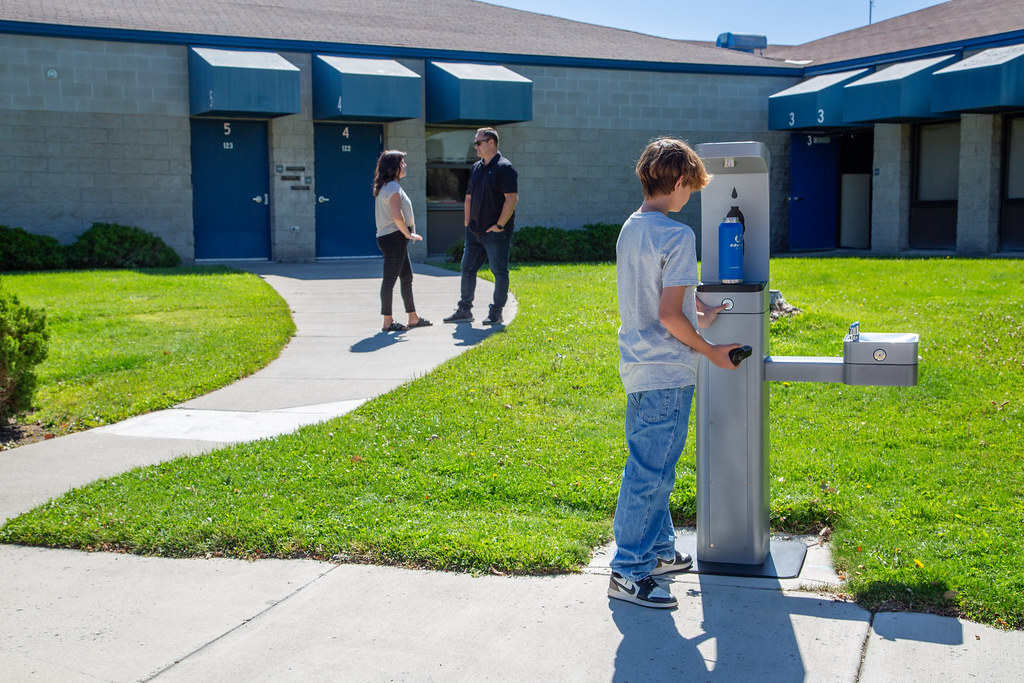
Reusable bottles are also common among students, which makes bottle filling capability worth considering alongside traditional drinking access. The most practical configuration may be a combination station that supports both uses.
Schools should consider:
- Expected student traffic
- Bottle filling capability
- Accessibility requirements
- Outdoor-rated construction
- Vandal-resistant components where appropriate
- Replacement part availability
- Winterization or freeze protection in cold climates
- Drainage and surrounding surfaces
Schools should also determine whether the unit will serve younger children, older students, athletes, visitors, or multiple groups because that can influence the most appropriate configuration.
Outdoor Drinking Fountains for Public Parks
Public parks can be some of the most demanding environments for outdoor drinking fountains. A single unit may serve children, walkers, cyclists, athletes, families, event visitors, and maintenance crews while remaining exposed to outdoor conditions every day.
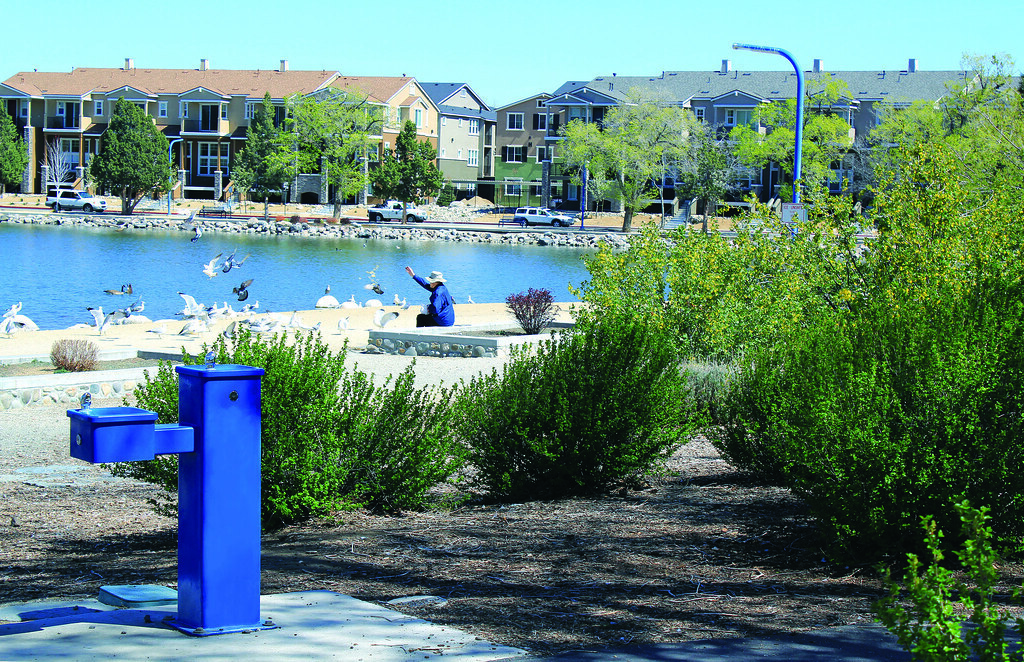
Parks also vary widely. A drinking fountain next to a playground has different needs than a unit along a walking trail, near a picnic pavilion, or beside a sports field.
Park projects often prioritize:
- Durable outdoor construction
- Vandal-resistant components
- Straightforward maintenance
- Accessible placement
- Weather and climate suitability
- Bottle filling where visitor demand supports it
- Pet hydration where the park is dog friendly
Outdoor Drinking Fountains for Dog Parks
Dog parks are a natural fit for combination hydration stations that serve both people and pets. Depending on the product, these units may combine a human drinking fountain, bottle filling capability, and a ground-level pet bowl from a single water supply.
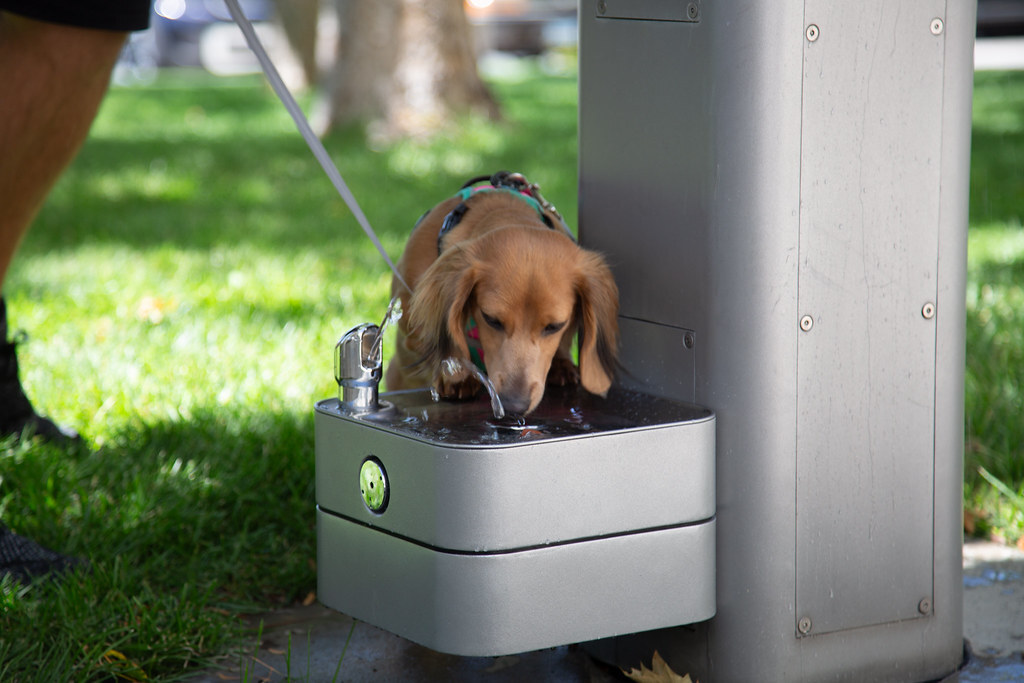
For dog parks, the fountain itself is only part of the planning process. The area around the fountain deserves equal attention because mud, standing water, heavy paw traffic, and repeated bowl use can make a poorly planned installation difficult to maintain.
When selecting a dog park drinking fountain, consider:
- Pet bowl design
- Drainage
- Surrounding surface material
- Ease of cleaning
- Durability
- Vandal-resistant controls
- Human accessibility
- Maintenance access
Outdoor Drinking Fountains for Tennis Courts and Sports Complexes
Athletic facilities often experience short periods of very high hydration demand. During practices, tournaments, games, and community events, multiple athletes may need water within a few minutes.
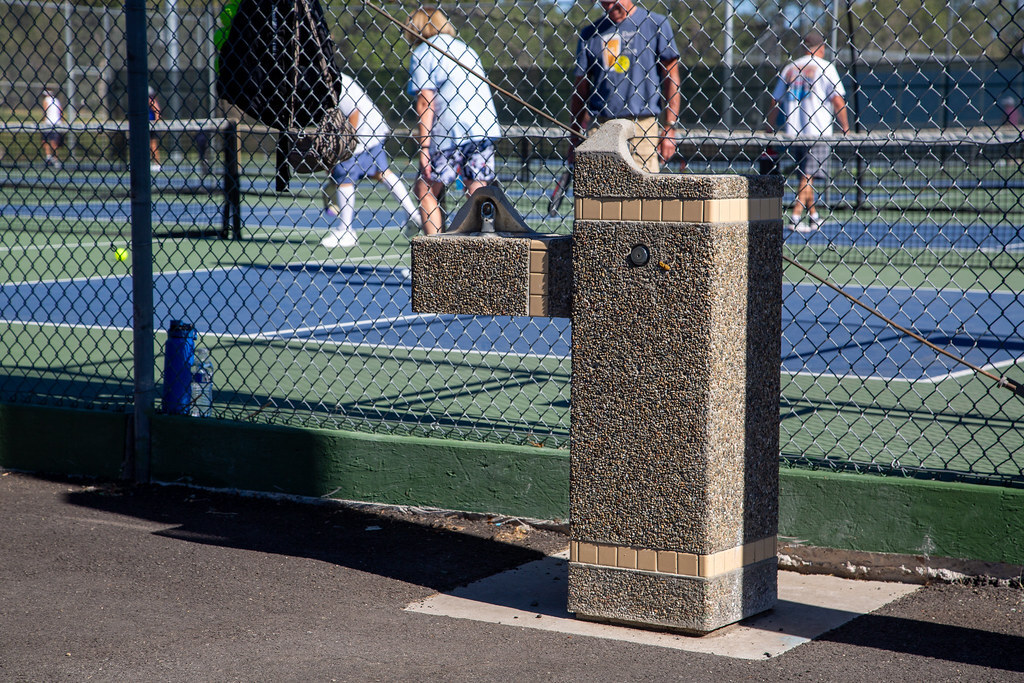
This makes bottle filling capability particularly useful at tennis courts, pickleball complexes, soccer fields, baseball facilities, running tracks, and multi-sport recreation centers.
Sports facilities should consider:
- Bottle refill demand
- Peak event traffic
- Placement near entrances, seating, or court exits
- Durable controls
- Accessibility
- Ease of cleaning and servicing
- Climate and seasonal use
Placement can be just as important as the fountain specification. A well-positioned hydration station can serve athletes and spectators without creating congestion around playing areas.
Outdoor Drinking Fountains for Universities and College Campuses
College campuses combine many of the requirements found in parks, schools, athletic facilities, and public gathering spaces. Students frequently carry reusable bottles, pedestrian traffic can be heavy, and equipment may need to complement surrounding architecture while remaining durable.
Campus planners may want to compare traditional outdoor drinking fountains, bottle filling stations, combination units, and architectural pedestal designs depending on the installation area.
Before ordering, confirm accessibility, utilities, freeze protection, expected traffic, surrounding landscaping, and the maintenance department responsible for long-term service.
Outdoor Drinking Fountains for Walking Trails, Greenways, and Bike Paths
Walking trails, greenways, and bike paths often place drinking fountains farther from buildings and maintenance facilities. Reliability and straightforward servicing can therefore become especially important.
Trail users may include walkers, runners, cyclists, families, and pets. The right configuration depends on expected users, available water service, climate, and whether the site would benefit from bottle filling or pet hydration.
Outdoor Drinking Fountains for Campgrounds and Recreation Areas
Campgrounds, RV parks, and recreation areas may experience highly seasonal traffic. A fountain can sit relatively quiet for part of the year and then serve large numbers of visitors during warmer months.
These locations should consider durability, seasonal shutdown procedures, freeze protection where applicable, service access, and whether bottle filling makes sense for hikers, campers, cyclists, and other visitors carrying reusable bottles.
Choose the Project First, Then Choose the Fountain
One of the clearest differences between successful outdoor hydration projects and disappointing ones is the order in which decisions are made.
Instead of beginning with "Which drinking fountain should we buy?" start with these questions:
- Where will the fountain be installed?
- Who will use it?
- How much daily and peak traffic is expected?
- Will users regularly carry reusable bottles?
- Is vandalism a concern?
- Does the climate create freezing conditions?
- Will pets use the area?
- What accessibility requirements apply?
- Who will maintain the fountain?
- What water, drain, and electrical utilities are available?
Once those questions are answered, comparing products becomes far more productive.
ADA Considerations for Outdoor Drinking Fountains
Outdoor drinking fountains are frequently installed in parks, schools, recreation areas, campuses, and municipal spaces where accessibility should be considered from the beginning of the project.
Accessibility is not determined by the fountain alone. Depending on the project, designers may need to consider the accessible route, surrounding surface, clear floor space, approach, fountain configuration, controls, spout height, and other applicable requirements.
A fountain designed to support an accessible installation can still be installed incorrectly. That is why we recommend reviewing both the product documentation and the requirements that apply to the complete project.
For a deeper explanation, review our complete guide to ADA drinking fountain requirements, including wheelchair and standing access, spout heights, clear floor space, knee and toe clearance, controls, and high-low configurations.
You can also compare ADA drinking fountains and bi-level drinking fountains when accessibility is part of the project plan.
Should You Add an Outdoor Bottle Filling Station?
Reusable water bottles have changed the way people use commercial hydration equipment. Students, athletes, runners, cyclists, employees, and park visitors increasingly want a convenient way to refill a bottle instead of relying only on a traditional bubbler.
Outdoor bottle filling stations are particularly worth considering for:
- Schools
- Universities
- Sports complexes
- Tennis and pickleball facilities
- Athletic fields
- Public parks
- Community recreation centers
- Trails and greenways
- Municipal campuses
Some projects are best served by a combination unit that includes both traditional drinking access and bottle filling capability. That provides more flexibility than assuming every user will hydrate the same way.
You can compare commercial bottle filling stations to see the different styles available.
Outdoor Drinking Fountain Maintenance
Even a heavy-duty commercial outdoor drinking fountain benefits from routine inspection. Maintenance schedules should follow the manufacturer's recommendations and account for local climate, water conditions, usage, and seasonal operation.
Routine Inspection
- Check controls for proper operation.
- Inspect the bubbler and water stream.
- Clean basins, bowls, bottle filler areas, and surrounding surfaces.
- Look for loose hardware, visible damage, or vandalism.
- Check drainage around the installation.
Seasonal Inspection
- Inspect visible plumbing connections.
- Review freeze protection or winterization procedures where applicable.
- Flush the system when recommended by the manufacturer or facility procedure.
- Inspect bottle filler components when equipped.
- Check exterior finishes for damage.
Long-Term Facility Review
- Inspect mounting and surrounding surfaces.
- Replace worn components as needed.
- Keep track of model numbers and compatible replacement parts.
- Check surrounding concrete, landscaping, or drainage conditions.
- Confirm accessible routes and clear spaces remain unobstructed.
Common Outdoor Drinking Fountain Buying Mistakes
Outdoor hydration projects become much easier when buyers know what to verify before ordering. These are some of the mistakes we would try to prevent during the selection process.
Choosing appearance before application.
Architectural appearance matters, but the fountain still needs to survive the actual installation environment.
Assuming any commercial fountain can be installed outdoors.
Use products specifically approved by the manufacturer for exterior applications.
Assuming freeze resistant means freeze proof.
Review the manufacturer's cold-weather requirements for the exact model and climate.
Ignoring drainage.
Water around the base of a fountain can create maintenance problems, mud, staining, or poor user conditions depending on the location.
Underestimating bottle refill demand.
Schools, athletic facilities, trails, and campuses may have far more bottle users than direct fountain users.
Overlooking vandal-resistant features.
Public and unsupervised installations can justify additional attention to controls, bubblers, fasteners, and protected components.
Forgetting future service access.
Valves, plumbing, controls, and replacement components eventually need maintenance.
Ignoring accessibility until after product selection.
Accessibility should be part of the layout and product-selection process from the beginning.
Ordering before confirming utilities.
Verify water, drainage, electrical requirements, mounting, and rough-in conditions for the exact model.
Questions We Ask Before Recommending an Outdoor Drinking Fountain
There is no single outdoor drinking fountain that is right for every facility. Before narrowing the choices, these are the types of questions that help us understand a commercial project:
- Where will the fountain be installed?
- Who will use it?
- How much traffic is expected?
- Will users carry reusable bottles?
- Is vandalism a concern?
- Will the fountain operate during freezing weather?
- Will pets use the area?
- What accessibility requirements apply?
- Who will maintain the unit?
- Is electrical service available if the selected model requires it?
- What water and drain connections are available?
- Is there a preferred material, finish, or architectural style?
These questions usually eliminate unsuitable product categories before anyone spends time comparing individual models.
Outdoor Drinking Fountain Selection Guide
| Project Type | Good Starting Point | Key Things to Verify |
|---|---|---|
| Public Park | Durable pedestal or combination fountain | Vandal resistance, accessibility, climate, maintenance |
| School | Outdoor hydration station with drinking and bottle filling access | Student users, accessibility, durability, bottle demand |
| Dog Park | Combination station with pet bowl | Drainage, cleaning, human access, durability |
| Tennis or Sports Complex | Bottle filling station with drinking access | Peak demand, placement, traffic, accessibility |
| University Campus | Combination drinking fountain and bottle filler | Architecture, bottle demand, accessibility, maintenance |
| Walking Trail or Greenway | Durable outdoor pedestal fountain | Utilities, service access, weather, pet use |
| Campground | Heavy-duty outdoor fountain or combination station | Seasonal operation, winterization, service access |
| Municipal Plaza | Architectural outdoor hydration station | Appearance, vandal resistance, accessibility, traffic |
Why Buy Outdoor Drinking Fountains From ProDrinkingFountains.com?
ProDrinkingFountains.com helps schools, parks departments, contractors, landscape architects, facility managers, universities, municipalities, sports facilities, and commercial buyers compare drinking fountains, bottle filling stations, filters, replacement products, and outdoor hydration solutions.
Outdoor projects can be especially confusing because buyers need to think about far more than the product itself. Climate, vandal resistance, accessibility, bottle filling, pet use, utilities, drainage, finishes, service access, and replacement compatibility can all influence the right choice.
Our goal is to help you narrow the options based on the actual project instead of simply steering you toward whichever model happens to be popular.
Need help choosing an outdoor drinking fountain, bottle filling station, pet fountain, or commercial hydration solution? Call 888-503-7937 for product assistance or larger commercial project quotes.
Outdoor Drinking Fountain FAQs
What is the best material for an outdoor drinking fountain?
304 stainless steel is a common commercial choice because of its corrosion resistance and durability in many environments. Powder-coated outdoor fountains can also be a good choice when color or architectural appearance matters. The best material depends on the manufacturer, installation environment, maintenance expectations, and project requirements.
What should I look for in a vandal-resistant park drinking fountain?
Look for manufacturer-specified features such as durable construction, protected or recessed controls, pinned or tamper-resistant bubblers, protected plumbing, and tamper-resistant fasteners. No fountain should be assumed to be completely vandal-proof.
Are outdoor bottle filling stations worth considering?
Yes, especially for schools, universities, sports complexes, tennis courts, parks, and trails where users frequently carry reusable bottles. Confirm that the selected model is specifically intended for outdoor installation.
What does freeze resistant mean on an outdoor drinking fountain?
Freeze-resistant designs are intended to address cold-weather conditions using manufacturer-specific systems or installation methods. Do not assume freeze resistant means freeze proof. Review the exact product requirements and local climate before ordering.
Are outdoor drinking fountains ADA compliant?
Many outdoor fountains are designed to support accessible installations, but compliance depends on more than the product. The accessible route, clear floor space, fountain configuration, mounting, controls, surrounding surface, and other applicable requirements must also be considered.
What type of drinking fountain is best for a dog park?
Many dog parks start by comparing combination fountains that provide human drinking access and a ground-level pet bowl. Drainage, cleaning, durability, accessibility, and surrounding ground conditions should also be considered.
What type of outdoor fountain is best for a school?
Schools often benefit from durable outdoor hydration stations that provide both drinking fountain access and bottle filling capability. Accessibility, student age, expected traffic, climate, maintenance, and installation location should guide the final selection.
What should a sports complex look for in an outdoor hydration station?
Sports complexes should consider peak bottle refill demand, durable controls, accessible installation, placement near high-traffic areas, weather exposure, and ease of maintenance.
Can an indoor drinking fountain be installed outside?
Do not install an indoor drinking fountain outdoors unless the manufacturer specifically approves the model for exterior use. Outdoor environments can expose equipment to weather, moisture, temperature changes, and other conditions the product may not be designed to handle.
How long does an outdoor drinking fountain last?
There is no single lifespan that applies to every model. Service life depends on construction, environment, water conditions, usage, vandalism, installation quality, maintenance, and replacement part availability. Choosing a commercial model suited to the application and maintaining it according to manufacturer recommendations can support longer service life.
About the Author
Anthony DiCicco is part of the ProDrinkingFountains.com team and helps create practical product guidance for commercial drinking fountains, bottle filling stations, filters, water coolers, and facility hydration projects.
His work focuses on helping schools, contractors, parks departments, architects, universities, municipalities, facility managers, and commercial buyers make clearer product decisions based on real-world use, installation needs, accessibility considerations, climate, maintenance planning, and replacement compatibility.