







Drinking Fountain Replacement Guide: How to Replace or Upgrade an Existing Water Fountain
Posted by Anthony DiCicco on Jun 10th 2026
Many facilities do not start a drinking fountain replacement project by shopping for a specific model. They start with an older unit that no longer works well, looks outdated, needs bottle filling functionality, or no longer fits the way people use the space.
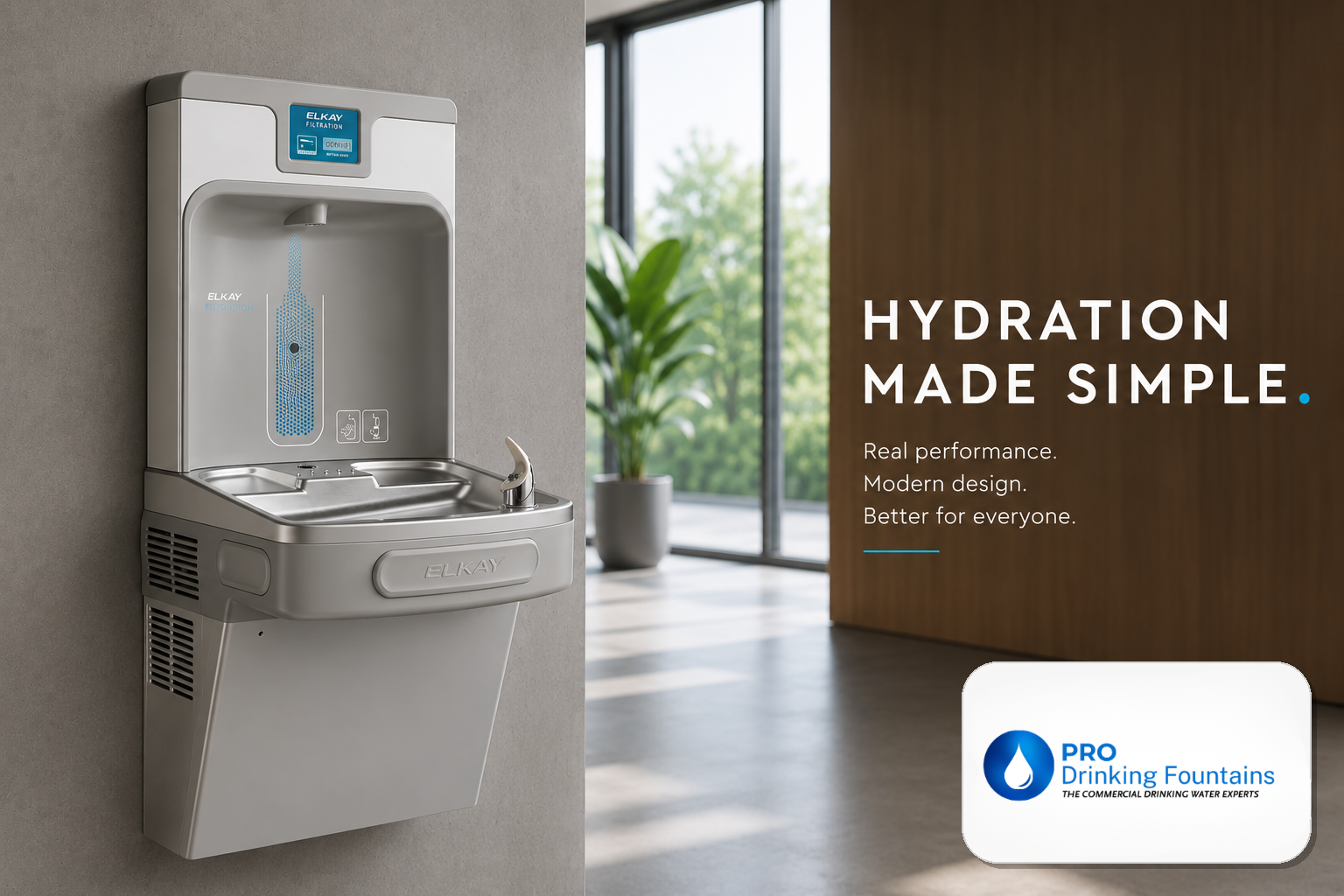
Today, replacing an old water fountain may mean installing a similar drinking fountain, upgrading to a bottle filling station, adding a retrofit bottle filler to a compatible unit, or planning a larger replacement project across a school, office, gym, campus, healthcare facility, or public building.
The right choice depends on what is already installed and what your facility needs next. Before ordering, confirm the existing model number, installation style, chilled water needs, filtration needs, and whether a retrofit kit or full replacement is the better fit.
Can You Replace an Old Drinking Fountain With a Bottle Filling Station?
Yes. Many older drinking fountains can be replaced with a modern bottle filling station or a drinking fountain and bottle filler combination. In some cases, a compatible retrofit bottle filler can be added to an existing drinking fountain instead of replacing the full unit.
The key word is compatible. Retrofit kits are not universal. Compatibility depends on the current brand, model number, mounting style, plumbing, electrical access, and the specific retrofit kit.
Start With the Existing Drinking Fountain
The existing unit tells you where to begin. Before comparing replacement options, gather as much of this information as possible:
- Brand
- Model number
- Photos of the full unit
- Photos of the model tag, if available
- Indoor or outdoor location
- Wall-mounted, free-standing, recessed, semi-recessed, or bi-level layout
- Refrigerated or non-refrigerated
- Filtered or non-filtered
- Quantity needed
- Whether you want a drinking fountain only, bottle filler only, or combination unit
The model number is especially helpful. It can help identify whether the unit is refrigerated, whether it is filtered, whether a retrofit bottle filler may be compatible, and whether a full replacement is more practical.
If the model tag is worn or hard to find, take clear photos from multiple angles. Photos can help narrow down the product family and replacement direction.
Retrofit vs Full Replacement
One of the biggest decisions is whether to add a retrofit bottle filler or replace the full drinking fountain.
| Project Situation | Better Option to Consider |
|---|---|
| Existing unit is compatible and in good condition | Retrofit bottle filler |
| Existing unit is old, damaged, leaking, or unreliable | Full replacement |
| Facility wants a complete drinking fountain and bottle filler combination | Full replacement |
| Current unit is not compatible with a retrofit kit | Full replacement |
| Facility wants chilled water but the current setup does not provide it | New refrigerated unit or full replacement |
| Facility wants built-in filtration | Filtered replacement or compatible filtered retrofit |
| Wall layout, plumbing, or electrical conditions are changing | Full replacement planning |
| Multiple units are being upgraded across a school or facility | Project-based replacement plan |
A retrofit can be a practical upgrade when the existing fountain is still in good condition and compatible with the correct kit. A full replacement is usually the better path when the unit is old, unreliable, non-compatible, or when the facility wants a cleaner, more modern setup with bottle filling, filtration, chilled water, or a different layout.
Choosing the Right Replacement Type
Once you know what is currently installed, choose the replacement style that fits the space and use case.
Standard Drinking Fountain Replacement
A standard drinking fountain replacement works when the goal is a simpler like-for-like update. This may be the right fit for offices, commercial buildings, warehouses, churches, community centers, and public areas where bottle filling is not required.
Before ordering, confirm whether the replacement should be refrigerated or non-refrigerated and whether the existing installation style needs to be matched.
Drinking Fountain With Bottle Filler
A drinking fountain with bottle filler is one of the most common modern upgrades. It gives users traditional drinking fountain access plus a convenient way to refill reusable bottles.
This option is popular for schools, universities, gyms, healthcare facilities, offices, airports, recreation centers, and high-traffic commercial spaces. You can browse commercial water bottle filling stations to compare available bottle filler and combination options.
Bottle Filler Only
A bottle filler only model may be a good fit when the facility wants dedicated bottle filling access without a traditional bubbler. These are often used in offices, break rooms, gyms, wellness areas, fitness studios, staff spaces, and commercial corridors.
This option is best when bottle refilling is the main priority and the installation location can support the unit’s plumbing, mounting, and electrical requirements.
Bi-Level Drinking Fountain and Bottle Filler
Bi-level drinking fountains and bottle filler combinations are commonly used in schools, universities, healthcare facilities, government buildings, and public spaces where accessible drinking fountain layouts are part of the project plan.
Before ordering, confirm the specific model details and review project requirements with the contractor, architect, facilities team, or code professional involved in the job.
Filtered Drinking Fountain or Bottle Filler
A filtered drinking fountain or filtered bottle filling station may be the right choice when water quality, taste, or project requirements make built-in filtration important.
Filtered units also require a future maintenance plan. Before ordering several filtered units, confirm who will replace filters, how filters will be tracked, and whether standardizing around fewer filter types would make maintenance easier.
Outdoor or Pet-Friendly Drinking Fountain Replacement
Outdoor drinking fountain replacements need to be selected for exterior use. Parks, campuses, trails, playgrounds, recreation areas, sports complexes, and municipal spaces may need outdoor-rated units, freeze-resistant options, bottle filling access, or pet drinking fountains.
Do not replace an outdoor unit with an indoor-only product. Indoor and outdoor drinking fountains are not interchangeable.
School and Multi-Building Replacement Planning
Schools, universities, municipalities, and large facilities often replace drinking fountains in phases. Instead of guessing one unit at a time, create a simple inventory before requesting a quote.
Track the building name, area or floor, existing brand, model number, photos, quantity, condition, filtration preference, refrigeration preference, bottle filler needs, and priority level.
High-traffic areas are usually the best place to start, such as main hallways, cafeterias, gyms, athletic areas, student common areas, public corridors, and building entrances.
For larger projects, standardizing around fewer models or filter types can make future maintenance easier. This is especially helpful when filtered bottle fillers are being installed across multiple buildings.
Common Mistakes to Avoid
Many replacement problems happen because the buyer chooses by price or appearance before confirming the project details.
- Ordering without checking the existing model number
- Assuming all bottle fillers are filtered
- Assuming all units provide chilled water
- Buying a retrofit kit without confirming compatibility
- Ignoring electrical requirements
- Forgetting about future filter replacement
- Treating indoor and outdoor units as interchangeable
- Choosing only by price instead of installation fit
A good replacement should fit the space, match the facility’s needs, and be practical to maintain after installation.
What to Have Ready Before You Call for Help
You do not need every answer before asking for help, but the right information makes the process much faster.
- Existing brand and model number
- Photos of the current unit
- Quantity needed
- Indoor or outdoor location
- Installation style
- Filtered or non-filtered preference
- Refrigerated or non-refrigerated preference
- Bottle filler only, drinking fountain only, or combination preference
- Project timeline
- Shipping location
- Any requirements from the contractor, architect, facility manager, school district, or code professional
This information helps narrow the options and reduces the chance of choosing the wrong replacement.
Why Buy Replacement Drinking Fountains From ProDrinkingFountains.com?
ProDrinkingFountains.com helps schools, offices, contractors, facility managers, healthcare facilities, gyms, universities, municipalities, and commercial buyers choose drinking fountains, bottle filling stations, water coolers, filters, retrofit kits, and replacement options.
Replacement projects can be confusing because the right product depends on the existing unit and the facility’s goals. Our team can help you compare options, review important selection details, and narrow the choices based on your project.
Whether you need one replacement drinking fountain or a larger project quote, ProDrinkingFountains.com can help you find the right fit.
Need help choosing a replacement drinking fountain, bottle filling station, retrofit kit, or filter? Call 888-503-7937 for product assistance or larger commercial project quotes.
Drinking Fountain Replacement FAQs
Can I replace an old drinking fountain with a bottle filling station?
Yes. Many older drinking fountains can be replaced with a modern bottle filling station or a drinking fountain and bottle filler combination. In some cases, a compatible retrofit bottle filler may also work if the existing unit supports that specific retrofit kit.
Can I add a bottle filler to my existing drinking fountain?
In some cases, yes. A compatible retrofit bottle filler may work if the existing drinking fountain supports the retrofit kit. Compatibility depends on the existing brand, model number, installation details, and the specific retrofit product.
Do I need the existing model number before ordering a replacement?
Yes, it is strongly recommended. The model number helps confirm replacement options, retrofit compatibility, refrigeration, filtration, installation style, and product family.
Should I replace the full drinking fountain or use a retrofit kit?
A retrofit may be a good option when the existing unit is compatible and in good condition. A full replacement is often better when the existing unit is old, damaged, non-compatible, unreliable, or when the facility wants updated bottle filling, filtration, refrigeration, or layout features.
Are all bottle filling stations filtered or refrigerated?
No. Some bottle filling stations are filtered and some are non-filtered. Some are refrigerated and provide chilled water, while others are non-refrigerated and provide ambient water. Always check the specific product details before ordering.
What should schools consider before replacing drinking fountains?
Schools should identify existing model numbers, prioritize high-traffic areas, consider bottle filling access, review filtration needs, plan future filter maintenance, and decide whether replacements will happen all at once or in phases.
About the Author
Anthony DiCicco is part of the ProDrinkingFountains.com team and helps create practical product guidance for commercial drinking fountains, bottle filling stations, filters, water coolers, and facility hydration projects.
His work focuses on helping schools, contractors, offices, gyms, facility managers, and commercial buyers make clearer product decisions based on real world use, installation needs, maintenance planning, and replacement compatibility.