


ADA Drinking Fountains & Barrier-Free Water Coolers
-
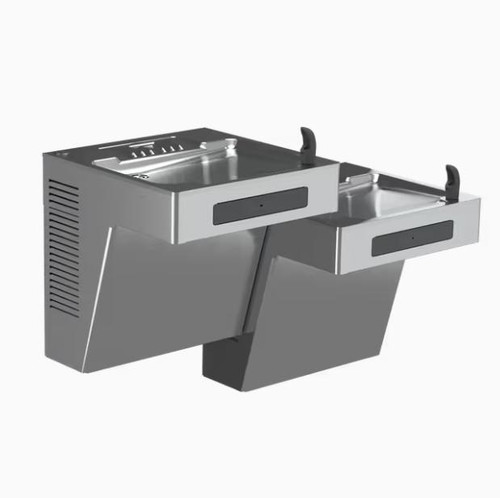
Sloan DRS125-UNFIL-REF-SS DropSpot On Wall Bi-Level Cooler, Non-Filtered, Refrigerated, Stainless Steel, 33820079
Now: $1,919.19MSRP: $2,952.60You save $1,033.41
⚠ Order Online 24/7. Contact us at 888-503-7937 or chat online Mon-Fri 9AM-5PM EST.

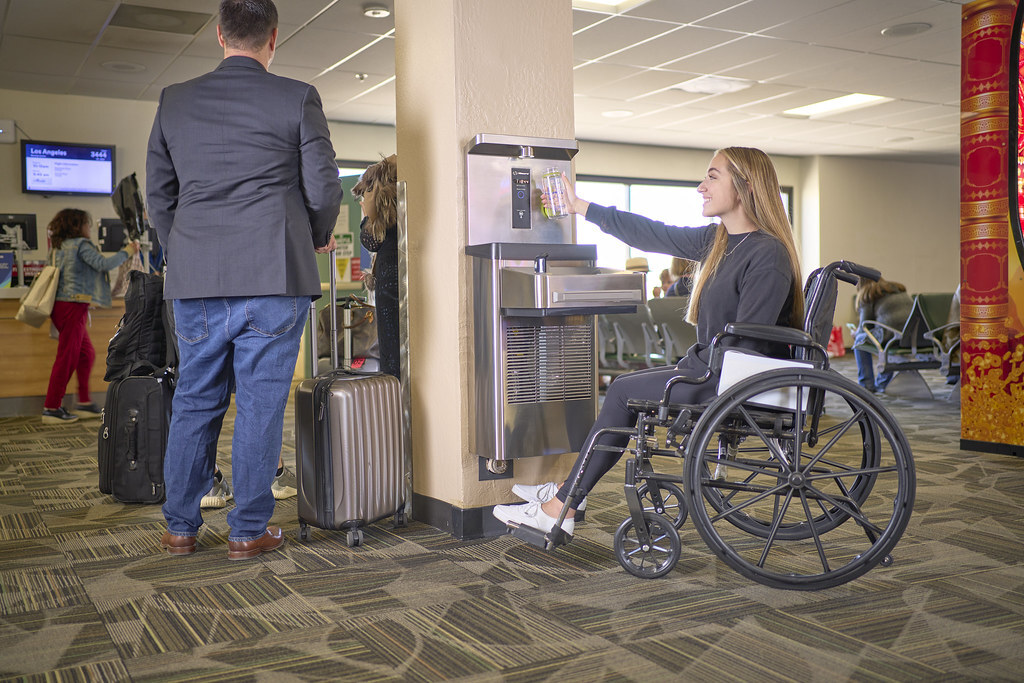
ADA drinking fountains and barrier-free water coolers provide accessible hydration for wheelchair users and other building occupants while helping commercial facilities meet accessibility requirements. These models are commonly installed in schools, offices, healthcare facilities, government buildings, recreation centers, airports, and other public and commercial spaces.
Available options include single-level ADA drinking fountains, bi-level and hi-lo drinking fountains, refrigerated water coolers, non-refrigerated fountains, and accessible bottle filling station combinations. Many models are designed with wheelchair-accessible mounting heights, easy-to-operate controls, and configurations that accommodate both seated and standing users when properly installed.
At ProDrinkingFountains.com, you'll find ADA compliant drinking fountains and barrier-free water coolers from leading manufacturers including Elkay, Halsey Taylor, Haws, Oasis, Murdock, and more. Whether you're replacing an existing fountain, upgrading to a bottle filling station, or specifying accessible hydration equipment for a new construction project, our team can help you find the right solution for your facility.
ADA drinking fountains and barrier-free water coolers are designed to provide accessible drinking water in commercial and public facilities. They are commonly used in schools, offices, hospitals, healthcare facilities, government buildings, airports, recreation centers, libraries, retail facilities, and other locations where accessible hydration is required or desired.
Choosing the right ADA drinking fountain involves more than finding a product described as ADA compliant. Buyers should also consider the fountain configuration, mounting location, available clear floor space, plumbing and electrical requirements, refrigeration, bottle filling capability, expected traffic, and whether access is being provided for both wheelchair users and standing users.
Start with the building and the people who will use the fountain. The best model for an elementary school may be different from the best choice for an office, hospital, airport, park, or manufacturing facility.
| Project Need | What to Consider |
|---|---|
| Wheelchair Accessibility | Choose a fountain designed for an accessible approach and verify mounting, clear floor space, knee and toe clearance, controls, and surrounding conditions. |
| Wheelchair & Standing Access | A bi-level or hi-lo drinking fountain is a common way to provide lower and higher drinking positions within one coordinated installation. |
| Chilled Water | Select a refrigerated ADA water cooler when chilled drinking water is desired. Confirm electrical and ventilation requirements before ordering. |
| Ambient Water | Non-refrigerated drinking fountains can be a simpler option where chilled water is unnecessary or cooling equipment is located elsewhere. |
| Bottle Filling | Consider an integrated bottle filling station when users regularly carry reusable water bottles, but evaluate the complete drinking fountain installation rather than the bottle filler alone. |
| Replacement Project | Identify the existing manufacturer and model number and compare plumbing, drain, electrical, mounting, cabinet, and rough-in requirements before choosing a replacement. |
| New Construction | Coordinate the exact model with architectural, plumbing, and electrical plans before the wall and rough-in work is completed. |
For commercial drinking fountains, accessibility involves both the equipment and the completed installation. The ADA Standards address factors including the drinking position, approach, clear floor space, knee and toe clearance, spout location, controls, water flow, and access for wheelchair users and standing persons.
This is why it is more accurate to think of an ADA drinking fountain as equipment designed to support an accessible installation rather than assuming that purchasing a particular model automatically makes a project compliant.
For exact dimensions, mounting considerations, standing and wheelchair requirements, controls, clearances, and other technical details, see our complete ADA Drinking Fountain Requirements Guide.
Single-level barrier-free drinking fountains are commonly used when a wheelchair-accessible drinking position is needed. These units are typically wall mounted with open space underneath to accommodate the required approach when properly installed.
Bi-level drinking fountains, also known as hi-lo or split-level fountains, combine a lower and higher drinking position. This configuration is common in schools, offices, hospitals, airports, government buildings, and other commercial facilities because it can provide convenient drinking access for users of different heights within one coordinated station.
If you are specifically comparing high-low configurations, see our bi-level drinking fountains and bottle filling stations.
Federal ADA standards address drinking access for both wheelchair users and standing persons. A high-low configuration is one common way commercial facilities address these different drinking positions, although project requirements should always be evaluated for the specific installation.
The term ADA water cooler is commonly used for an accessible drinking fountain that includes a refrigeration system to chill incoming water. Refrigerated water coolers are especially common in schools, offices, hospitals, fitness facilities, factories, and other buildings where users expect chilled drinking water throughout the day.
Non-refrigerated ADA drinking fountains provide drinking water without an internal refrigeration system. They can be a good choice when chilled water is unnecessary, when the building already supplies cooled water, or when the project calls for a simpler hydration fixture with fewer mechanical components.
When replacing an existing refrigerated water cooler, verify more than cabinet dimensions. Cooling capacity, electrical requirements, drain location, supply location, wall mounting, ventilation, and rough-in dimensions can differ between models.
Bottle filling stations have become a popular addition to accessible drinking fountain installations. Combination units provide a traditional drinking fountain along with a dedicated bottle filling area, giving users the option to drink directly from the fountain or refill a reusable bottle.
These combination systems are especially popular in schools, universities, offices, healthcare facilities, recreation centers, airports, municipal buildings, and other high-traffic environments.
When accessibility is part of the project, evaluate the entire hydration station. Adding a bottle filler does not automatically make an existing drinking fountain accessible, and the bottle filling component should not be treated as a substitute for reviewing the applicable drinking fountain requirements.
Commercial ADA drinking fountains are available in many configurations. Understanding the basic differences can make it easier to narrow down the right product for a project.
ADA and barrier-free drinking fountains are used throughout commercial and public facilities. Common applications include K-12 schools, colleges and universities, office buildings, healthcare facilities, municipal buildings, airports, transportation facilities, recreation centers, libraries, manufacturing facilities, retail buildings, parks, stadiums, and other spaces that provide public or employee drinking water.
The correct product can vary significantly by application. Schools may prioritize durability and bottle filling, offices may prefer filtered refrigerated models, outdoor parks may require weather-resistant or freeze-resistant construction, and high-traffic public facilities may prioritize vandal resistance and ease of maintenance.
ProDrinkingFountains.com carries ADA drinking fountains, barrier-free water coolers, bi-level fountains, and hydration stations from leading commercial manufacturers including Elkay, Halsey Taylor, Haws, Oasis, Murdock, and others.
Each manufacturer offers different product families, cooling capacities, finishes, activation methods, bottle filling options, filters, outdoor configurations, and installation requirements. For replacement projects in particular, staying with the existing manufacturer can sometimes simplify plumbing and rough-in compatibility, but the exact model dimensions should always be compared before ordering.
Replacing an older drinking fountain is not always a direct one-for-one cabinet swap. Manufacturers change product lines, model numbers, refrigeration systems, mounting hardware, electrical requirements, and plumbing connections over time.
Before ordering a replacement, locate the data plate or model number on the existing fountain whenever possible. This can make it much easier to identify the current replacement model and determine whether the existing rough-in can be reused.
One of the most important things to understand when purchasing an ADA drinking fountain is that accessibility is not determined by the product alone. A fountain designed for an accessible installation can still create a problem if it is mounted incorrectly or if the surrounding space does not provide the required access.
Wall construction, finished floor height, mounting height, plumbing, adjacent fixtures, trash receptacles, furniture, circulation paths, and available floor space can all affect the finished installation.
State accessibility requirements, local building and plumbing codes, adopted construction standards, and project specifications may also apply in addition to federal ADA requirements. Architects, contractors, facility managers, and building owners should verify the requirements that apply to the specific project and jurisdiction.
ProDrinkingFountains.com specializes in commercial drinking fountains, water coolers, bottle filling stations, filters, hydration systems, and replacement equipment. Our focus on commercial hydration products allows us to help buyers compare configurations and manufacturers rather than simply selecting a fountain based on appearance.
We work with contractors, architects, facility managers, schools, municipalities, healthcare facilities, business owners, and other commercial buyers who need help selecting products for new construction, renovations, replacements, and facility upgrades.
Whether you need a basic barrier-free drinking fountain, refrigerated ADA water cooler, bi-level hydration station, outdoor fountain, or bottle filling station combination, our team can help narrow the options based on your project's requirements.
What is an ADA drinking fountain?
An ADA drinking fountain is a drinking fountain designed to support an accessible installation for people with disabilities when it is properly selected and installed according to applicable accessibility requirements.
Is an ADA drinking fountain the same as a barrier-free drinking fountain?
The terms are commonly used to describe drinking fountains designed for accessible use. Barrier-free models are generally designed to provide the approach, reach, and drinking position needed for users with disabilities when correctly installed.
What is an ADA water cooler?
An ADA water cooler is typically a refrigerated drinking fountain designed to support an accessible installation. It provides chilled drinking water while maintaining the configuration needed for accessible use when properly mounted.
Does an ADA drinking fountain have to be bi-level?
Not every individual fountain must be a bi-level unit. Federal ADA standards address drinking access for both wheelchair users and standing persons where drinking fountains are provided. Separate fountains or an appropriate combination unit may be used depending on the project and applicable requirements.
What is the difference between an ADA drinking fountain and a regular drinking fountain?
An ADA drinking fountain is designed to accommodate accessibility requirements involving factors such as approach, drinking position, controls, clearances, and reach. A standard drinking fountain may not be designed to support those same requirements.
Can an ADA drinking fountain include a bottle filling station?
Yes. Many commercial hydration stations combine an accessible drinking fountain with a bottle filling station, providing both traditional drinking access and reusable bottle filling.
Does a bottle filling station replace an ADA drinking fountain?
A bottle filling station should not automatically be treated as a replacement for a required drinking fountain. When drinking fountain accessibility requirements apply, the complete installation and the required drinking positions should be reviewed.
Do ADA drinking fountains provide chilled water?
Some do and some do not. Refrigerated ADA water coolers include an internal chilling system, while non-refrigerated barrier-free drinking fountains provide ambient or building-supplied water.
What brands make ADA drinking fountains?
Major commercial drinking fountain manufacturers include Elkay, Halsey Taylor, Haws, Oasis, Murdock, and others. Available configurations include refrigerated and non-refrigerated fountains, bi-level units, outdoor fountains, and bottle filling station combinations.
Can you replace an older ADA drinking fountain with a newer model?
Usually, but replacement compatibility should be confirmed before ordering. Identify the existing manufacturer and exact model number and compare mounting, plumbing, drain, electrical, cabinet, and rough-in requirements with the proposed replacement.
Does buying a product labeled ADA compliant guarantee ADA compliance?
No. The product is only part of the installation. Mounting, approach, clear floor space, clearances, controls, surrounding objects, accessible routes, and other project conditions can affect compliance.